Co-Owner Disputes on Inherited Homes: Navigating NY Partition Actions in 2026
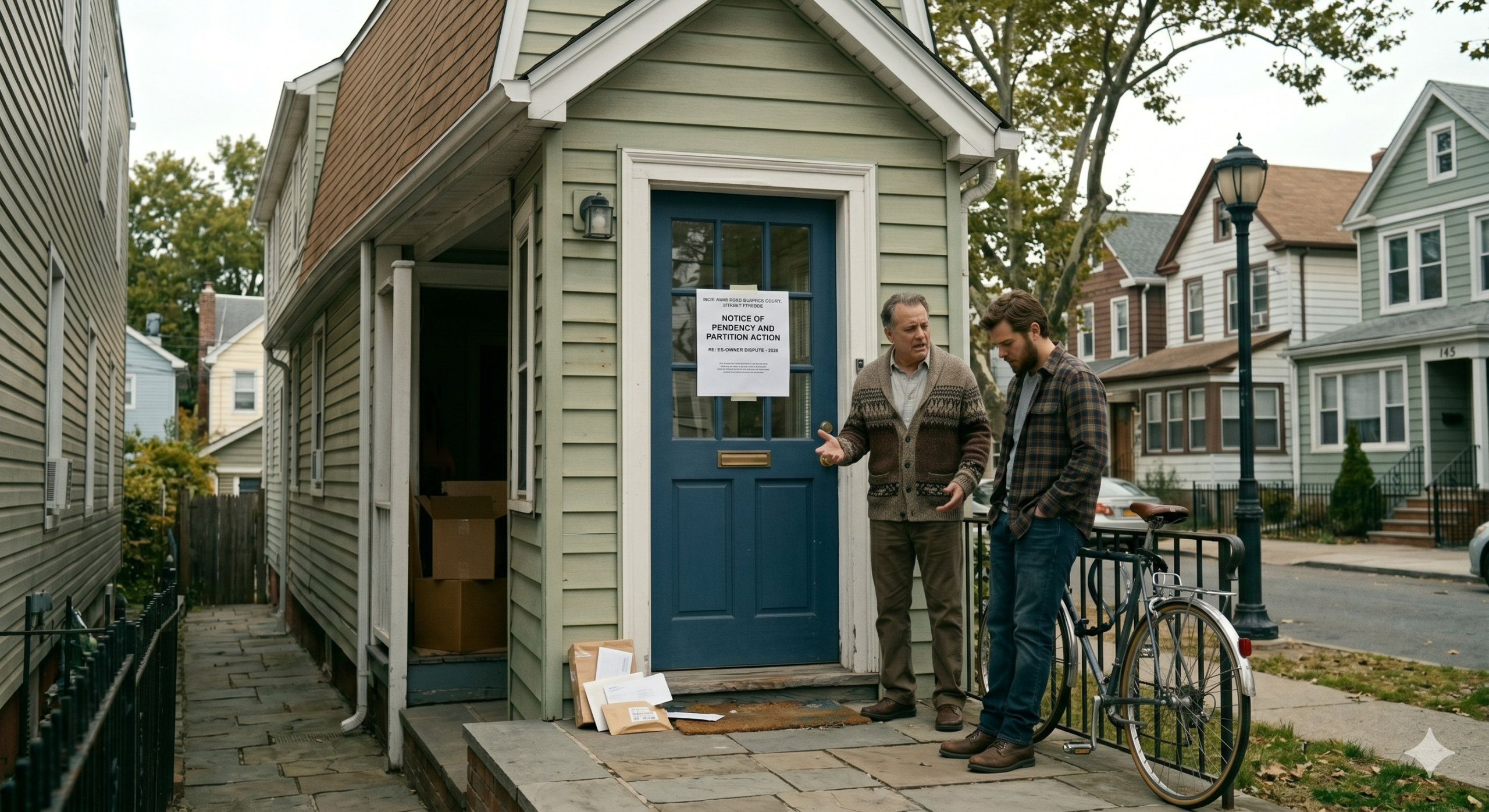
Inheriting a piece of New York City real estate is one of the most powerful ways to build generational wealth. However, when a property in Brooklyn or Queens is passed down to multiple siblings or relatives, it often creates a highly complex, deeply emotional legal standoff.
What happens when one sibling wants to cash out their equity and sell the house, but another sibling wants to keep it as a rental property—or worse, is living in the home rent-free and refuses to leave?
Many co-owners mistakenly believe that if one person says “no” to selling, the entire process is frozen. This is simply not true. In New York, you cannot be forced to remain a co-owner indefinitely. If your co-owners refuse to cooperate, you have a powerful legal remedy: the Partition Action.
Here is exactly how partition actions work in 2026, the timeline you can expect, and how recent legal protections ensure you get top dollar for your family’s asset.
What is a Partition Action?
A partition action is a formal lawsuit filed in the New York Supreme Court under Article 9 of the Real Property and Proceedings Law. Any joint tenant or tenant in common has the absolute right to file this lawsuit to terminate the co-ownership.
Technically, the court can order a “partition in kind,” which physically divides the land. However, in Brooklyn and Queens, where you are dealing with single-family or multi-family homes on small lots, physically chopping the house in half is impossible. Therefore, in almost all residential cases, the court will force the sale of the property and fairly divide the proceeds among the owners based on their ownership shares.
The 2026 Timeline: How Long Does It Take?
Because a partition action requires going through the backlogged New York court system, it is not an overnight solution. A typical partition action timeline in New York falls within a 6 to 24-month range, depending heavily on how aggressively the other owners contest the lawsuit.
Here is a simplified breakdown of the timeline:
- Filing and Initial Court Review (1–3 months): Your attorney files the complaint, and the other co-owners are formally served with the lawsuit.
- Financial Evaluation and Property Assessment (2–4 months): The court looks at the value of the property and begins a financial accounting. This is critical, as the court will adjust the final payouts if one owner was paying all the property taxes and maintenance while the other owner contributed nothing.
- Court Decision (1–3 months): The judge officially rules that the property must be sold.
- Sale and Distribution (2–6 months): The property is listed, sold, and the funds are distributed.
The UPHPA: A Massive Protection for Inherited Homes
In the past, partition actions often ended with the home being sold at a courthouse auction, usually for pennies on the dollar to predatory investors. Fortunately, if the home was inherited by family members, it is classified as “heirs property,” and you are protected by the Uniform Partition of Heirs Property Act (UPHPA).
Under this law, New York courts provide several massive protections:
- The Buyout Option: Before a sale is forced, the co-owners who want to keep the home are given a legal right of first refusal to buy out the sibling who wants to sell at a fair, court-appraised price.
- Open-Market Sales: If a buyout cannot be reached, the court will no longer send the house to a devastating public auction. Instead, the court will mandate a commercially reasonable sale. This means hiring a real estate broker to list the property on the open market to ensure the family receives the true fair market value.
How to Speed Up the Process
The absolute fastest way to resolve a co-owner dispute is to avoid the judge entirely. Often, simply hiring an attorney to formally draft and file the initial partition lawsuit is enough of a “wake-up call” to bring a stubborn co-owner to the negotiating table. Once they realize the court will eventually force the sale—and that fighting it will only drain the family’s equity through legal fees—they usually agree to a voluntary open-market sale or a private buyout.
You Need a Real Estate Expert, Not Just a Litigator
If the court orders an open-market sale, or if you manage to reach a settlement agreement to list the house voluntarily, you need a broker who understands the extreme nuances of dispute-driven real estate. Selling a house where the owners actively dislike each other requires intense diplomacy, strict transparency, and aggressive market positioning.
At the LJ Realty Team, we have over 21 years of experience navigating highly complex, emotionally charged estate and partition sales in Brooklyn and Queens. We know how to work seamlessly with your legal counsel, manage uncooperative occupants, and execute an open-market strategy that guarantees top dollar for your inherited asset.
Don’t let a family dispute trap your equity. Stop by our office at 127-03 Rockaway Blvd in South Ozone Park, or contact Sheldon The Realtor online today to discuss how we can help you successfully list and sell your inherited property.