NYC Heat Season Checklist for Brooklyn and Queens Landlords
NYC Heat Season runs from October 1 through May 31. For Brooklyn and Queens landlords, compliance is measured by the temperature inside each apartment—not simply whether the boiler is running or one radiator feels warm. A useful preseason plan combines equipment service, current owner records, a clear tenant-reporting channel and a written response log. Completing those steps before the first cold night reduces guesswork and makes it easier to show what happened, who responded and whether service was restored. The checklist below turns NYC Heat Season landlord requirements into a practical operating plan without wandering into broader rent-law issues.
Know the Temperature and Hot-Water Rules
According to NYC Housing Preservation and Development, residential building owners must meet these minimums:
| Period | Outdoor condition | Minimum indoor temperature |
|---|---|---|
| 6:00 a.m.–10:00 p.m. | Below 55°F | 68°F |
| 10:00 p.m.–6:00 a.m. | Any outdoor temperature | 62°F |
| Hot water, all year | Not applicable | Constant minimum of 120°F |
During the day, the outdoor-temperature trigger matters. Overnight, it does not. Hot water is a separate, year-round obligation.
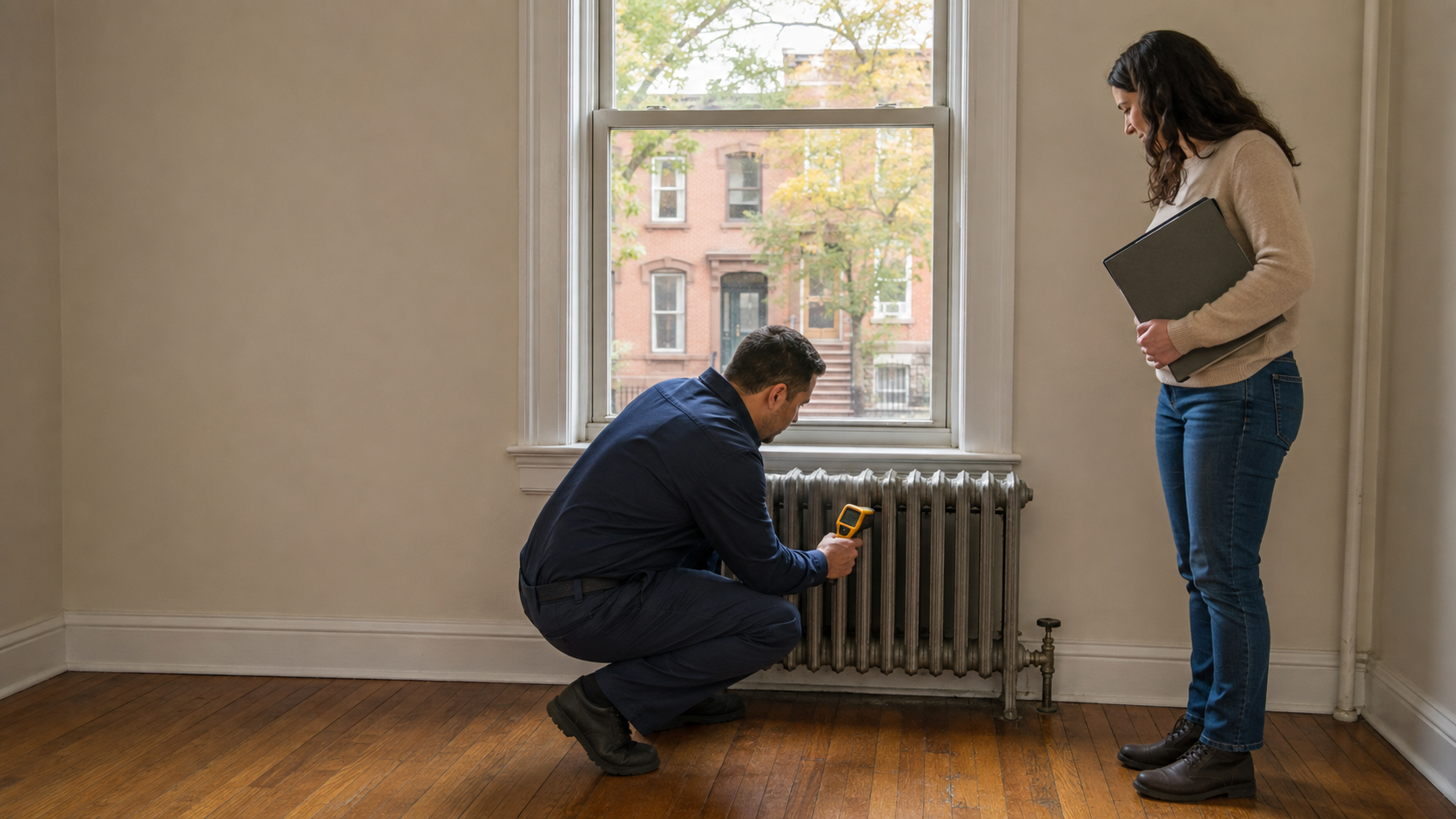
A boiler-room gauge or thermostat in one apartment does not establish the temperature in every unit. Cold conditions can be isolated to a top-floor bedroom, an end-of-line radiator, a closed zone or one side of the building. When possible, include upper and lower floors, the apartment farthest from the heating plant and previously troublesome rooms in the preseason check.
Complete the Preseason Check Before October 1
Schedule the start-up early enough to obtain parts and a follow-up visit if the first test reveals a problem.
| Area | Preseason action |
|---|---|
| Heating equipment | Have an appropriately qualified professional run a complete cycle and check the burner or heat source, pumps, controls, safety devices, venting and visible leakage as applicable to the system. |
| Distribution | Check representative radiators, baseboards, risers, vents and zone controls. Look for rooms that warm slowly or not at all. |
| Controls and utilities | Confirm thermostat operation, timer or outdoor-reset settings where installed, active utility accounts, fuel arrangements and the after-hours service contact. |
| Domestic hot water | Have the system checked separately at representative fixtures; a working heating loop does not prove compliant hot water. |
| Access | Confirm boiler-room keys, shutoff locations, contractor access, tenant contact information and who can authorize emergency work. |
Use a properly licensed or otherwise qualified professional for system-specific work. Do not bypass a safety control or treat an unsafe improvised heater as a repair. NYC’s cold-weather safety guidance warns residents not to use an oven for heat.
Match the Compliance File to the Building
Three record checks are especially useful before the season begins:
- HPD property registration. Owners must register annually by September 1 for residential buildings with three or more units and for one- or two-family homes where neither the owner nor an immediate family member lives. HPD uses the filed contacts for official notices and emergencies. Confirm that the registration was accepted and that the managing-agent information is current.
- DOB boiler filing. Preseason service and the annual DOB inspection filing are different tasks. DOB’s current boiler guidance generally requires annual low-pressure boiler inspection reports for residential buildings with six or more families, mixed-use or commercial buildings and SROs. It lists boilers in residential buildings with five families or fewer, and a boiler serving only one dwelling unit, among the exceptions. Ask the appropriate professional how the rule applies to the property and equipment.
- HPD Heat Sensor Program. Heat sensors are not a blanket requirement for every rental. HPD selects certain Class A multiple dwellings based on recent complaint and violation history and notifies the owner. A selected building has installation, tenant-notice, recordkeeping and monthly reporting duties under the Heat Sensor Program.
Use HPD Online to review complaints, violations, registration, charges and litigation for the property.
Make Tenant Reporting Easy
Before October 1, give tenants one clear phone number or email address for heat and hot-water problems, including an after-hours method. Ask for:
- the apartment and affected room;
- the date and time the condition was noticed;
- an indoor reading and how it was taken, if available;
- whether hot water is also affected; and
- the best way to arrange access.
Do not require a tenant to own a thermometer before accepting a complaint. A “no heat” report is enough to start checking the system. If access is needed, propose reasonable windows promptly and record each attempt, response and completed visit.
Use the Same Response Sequence Every Time
- Acknowledge and log the report. Record the time received and tell the tenant who is handling it.
- Check the scope. Determine whether the issue affects one room, one apartment, one line or the whole building. Review controls and utility status without assuming the tenant caused the problem.
- Dispatch the right person. Contact the qualified service professional and arrange access to both the equipment and affected apartment.
- Communicate the plan. Give the tenant a realistic update and safe instructions while work is pending. Do not promise a completion time the contractor has not confirmed.
- Retest where the complaint occurred. Check the affected room after the repair, not just the boiler room. Record the time, location, reading, device and person who took it.
- Close the loop. Save the invoice or work ticket, tell the tenant what was completed and note any follow-up visit. An owner’s measurements are operational records; an HPD inspector will make an independent determination.
A simple maintenance log should include:
| Field | What to record |
|---|---|
| Initial report | Date, time, channel, apartment and rooms affected |
| Conditions | Indoor reading and method, outdoor condition and whether hot water was affected |
| Response | Person notified, dispatch time and contractor |
| Access | Proposed windows, attempts and actual entry time |
| Work | Diagnosis, repair, parts and safety instructions |
| Verification | Post-repair readings, tenant update and follow-up |
| Agency record | 311 service request, HPD complaint or violation number, certification and supporting documents |
If a 311 Complaint or HPD Violation Arrives
After a heat or hot-water complaint, HPD attempts to contact the owner or managing agent and may inspect if service remains unresolved or the tenant cannot be reached. Review the property in HPD Online, respond to the condition and preserve the complaint details.
HPD classifies heat and hot-water violations as Class C, immediately hazardous conditions with no correction time. Restore service immediately, follow the Notice of Violation and certify only after the condition has actually been corrected. HPD’s penalties and fees page explains that civil penalties and inspection fees may apply. If an owner does not timely correct an eligible condition, HPD’s Emergency Repair Program may arrange work and bill the property for the repair and related charges.
Keep the Property File Useful Beyond Heat Season
Retain service contracts, work tickets, invoices, applicable inspection filings, complaint logs and proof of correction. Those records can also support tenant placement and a later sale. If the plan changes, see the guides to selling a house with tenants in NYC, maintaining a vacant house before selling and the documents needed to sell a house in NYC.
Copy-and-Use Heat Season Checklist
- Heating system serviced and test-cycled
- Representative apartments and rooms checked
- Hot-water system checked separately
- Utility or fuel arrangements confirmed
- After-hours contractor and authorization plan confirmed
- HPD registration and contacts verified
- Applicable DOB boiler filing status checked
- Heat Sensor Program notice checked, if applicable
- Tenant reporting instructions sent
- Maintenance log opened for the season
Heating compliance is a building-operations matter; rental pricing and tenant readiness are separate real-estate decisions. Sheldon Myers, Licensed Associate Broker, can help Brooklyn and Queens owners review a unit’s rental positioning, presentation and leasing timeline. Request a confidential rental review. Serving Brooklyn and Queens property owners since 2004.
This article provides general real-estate information, not legal, engineering or safety advice. Confirm requirements with NYC agencies and consult a qualified heating professional and New York attorney for your property.