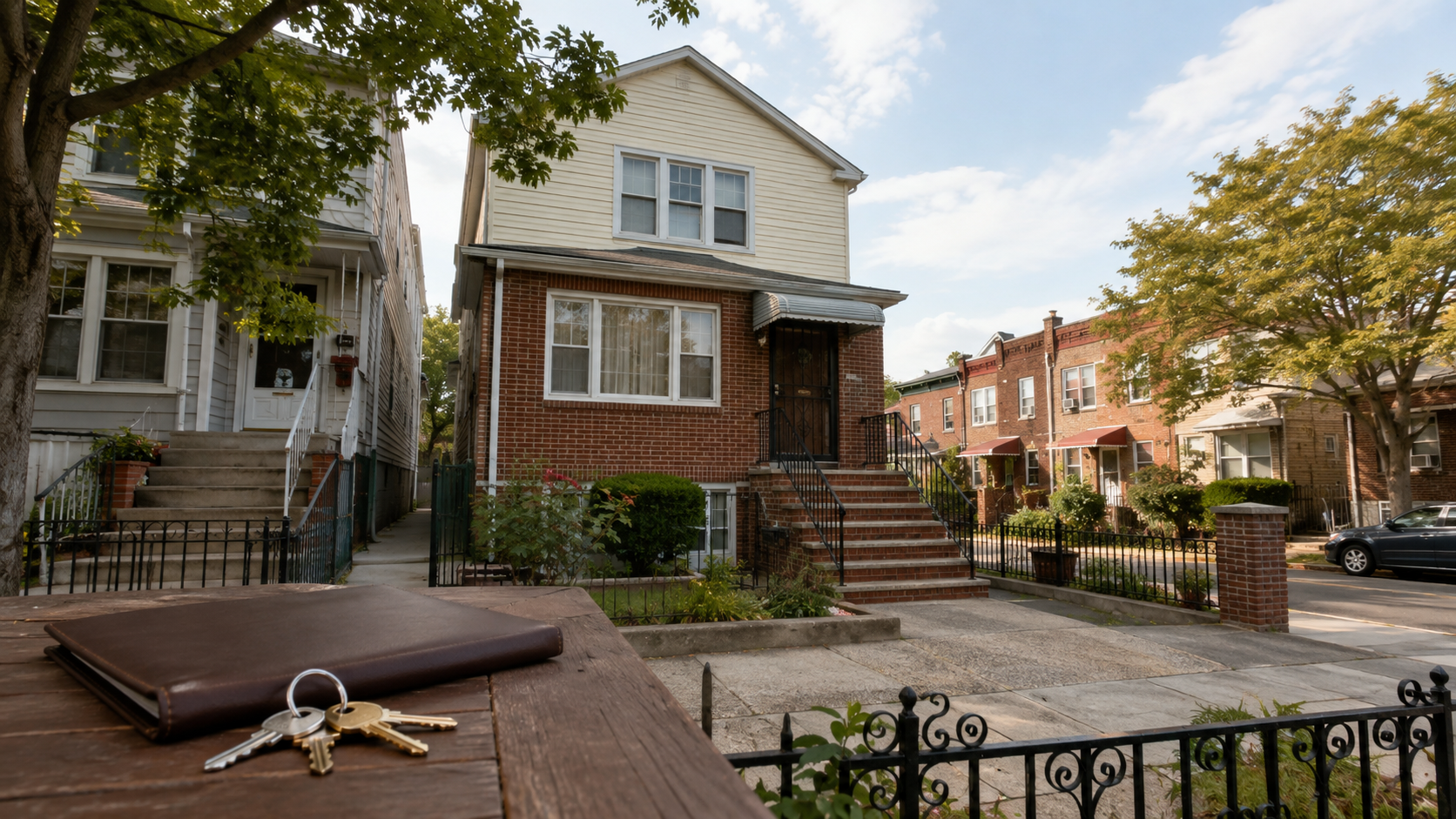
NYC First-Time Homebuyer Programs & Help
NYC first-time homebuyer programs can reduce the cash needed for a down payment or closing, but they do not all work the same way. HomeFirst is a New York City forgivable assistance loan; SONYMA offers New York State mortgage programs and optional down-payment loans. Each uses its own income limits, purchase-price caps, lender list, property rules, education requirement and repayment conditions. Before touring Brooklyn or Queens homes, confirm which program fits your household and how much cash you will still need at contract and closing.
The quick answer: compare the mortgage and the assistance separately
| Program | What it is | Potential benefit | Important limitation |
|---|---|---|---|
| NYC HomeFirst | A 0% forgivable subordinate loan | Up to the lesser of 20% of the purchase price or $100,000 | NYC property only; income, price, lender, inspection and owner-occupancy rules apply |
| SONYMA Achieving the Dream | A 30-year fixed first mortgage | SONYMA’s lowest-rate program, with a down payment as low as 3% | Regional income and purchase-price limits; first-time-buyer rule with limited exceptions |
| SONYMA Low Interest Rate Program | A 30-year fixed first mortgage | Competitive fixed rate, low down-payment option and eligible 1–4-family, condo and co-op purchases | Regional limits, education, occupancy and property requirements apply |
| SONYMA DPAL | A 0% assistance loan paired with a SONYMA mortgage | No monthly payments; generally up to $15,000 under the standard formula | May be repayable after an early sale or refinance; attaching it usually raises the first-mortgage rate |
| DPAL Plus 2026 | A limited enhanced SONYMA assistance loan | Up to $30,000 for eligible households at or below 60% of area median income | Limited funds; eligibility and availability must be confirmed before relying on it |
HomeFirst and SONYMA are not interchangeable. HomeFirst supplies secondary assistance alongside an approved first mortgage. SONYMA’s main programs supply the first mortgage, with DPAL available as an add-on. A buyer may qualify for one option and not another.
How NYC HomeFirst works in 2026
The NYC Department of Housing Preservation and Development says HomeFirst can provide a qualified first-time buyer with up to $100,000 toward a down payment or eligible closing costs. The maximum is the lesser of:
- 20% of the purchase price; or
- $100,000.
That is a maximum calculation, not a promise that every applicant will receive $100,000. The final amount depends on the transaction, funding source and program underwriting.
Eligible property types include one- to four-family homes, condominiums and cooperative apartments in the five boroughs. The buyer must use the property as a primary residence. For a multi-unit home, the buyer may rent units other than the unit the buyer occupies, subject to the program and other applicable rules.
Current HomeFirst household-income limits
HPD lists the following maximum gross household incomes, effective June 1, 2026:
| Household size | Maximum income at 120% AMI |
|---|---|
| 1 | $142,560 |
| 2 | $162,840 |
| 3 | $183,240 |
| 4 | $203,520 |
| 5 | $219,840 |
| 6 | $236,160 |
| 7 | $252,480 |
| 8 | $268,680 |
Household composition and income documentation matter. A counselor, not a casual online calculation, should confirm which people and income sources the program counts.
Current Brooklyn and Queens purchase-price limits
For existing homes, HPD currently publishes these limits for Kings and Queens counties:
| Borough/county | 1 unit | 2 units | 3 units | 4 units |
|---|---|---|---|---|
| Brooklyn/Kings | $732,000 | $936,000 | $1,134,000 | $1,404,000 |
| Queens | $699,000 | $894,000 | $1,083,000 | $1,342,000 |
HPD states that these limits took effect December 1, 2025 and remain until HUD issues replacements. Newly built or rehabilitated homes and designated exception areas can follow different limits. Recheck the live HPD page before making an offer.
Other HomeFirst requirements buyers should plan for
The current HomeFirst term sheet also requires a buyer to:
- Have not owned a home during the previous three years
- Complete an approved homebuyer-education course
- Work through an HPD-approved housing counseling agency
- Obtain a qualifying fixed-rate first mortgage from a HomeFirst participating lender
- Contribute at least 3% of the purchase price from the buyer’s own funds as a down payment or contract deposit
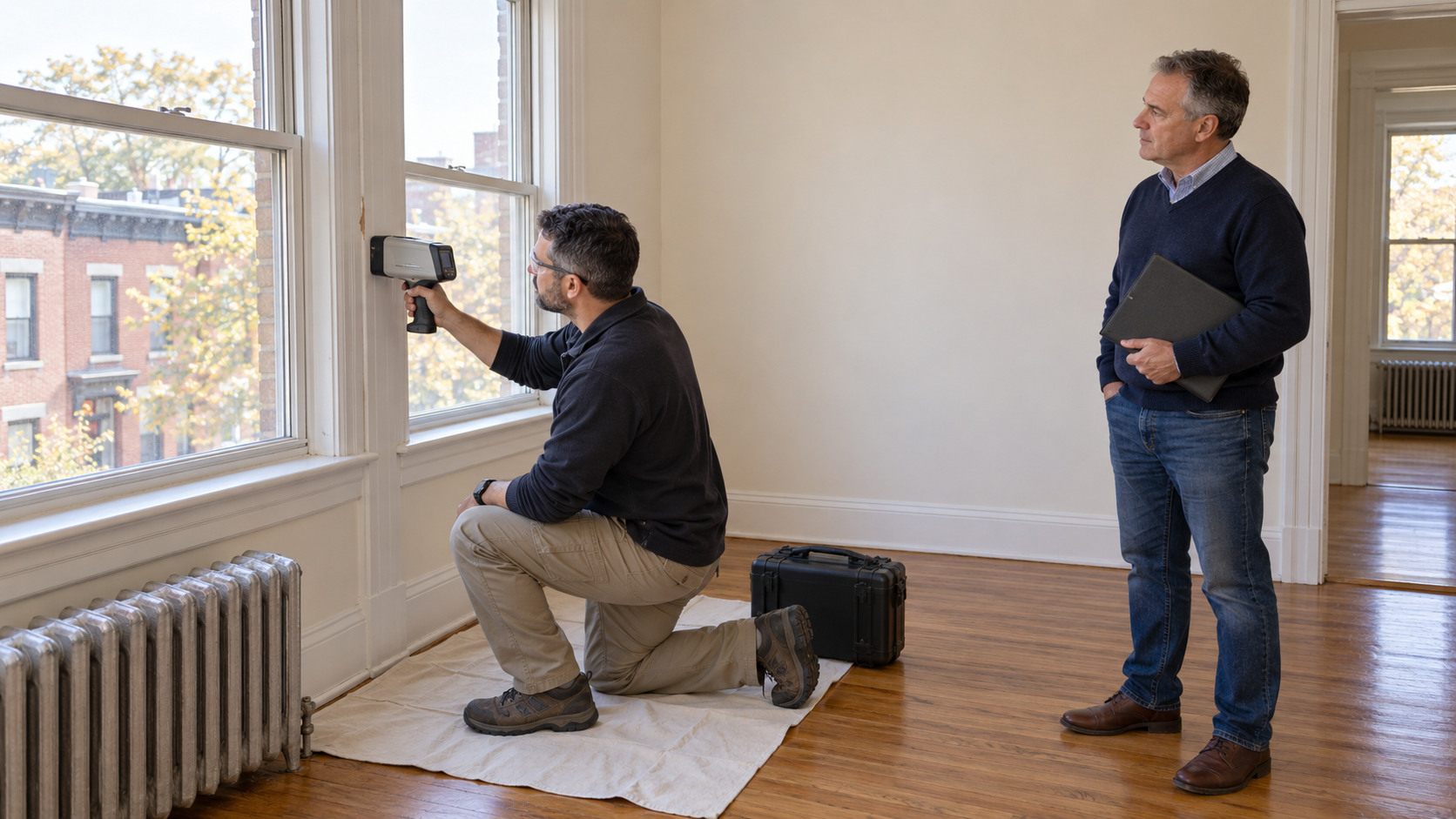
- Pass the required property inspection
- Meet credit, asset, debt-ratio and documentation standards
- Pay the program’s nonrefundable $1,500 processing fee in the stated installments
HomeFirst does not permit a mortgage broker to originate the required first mortgage. Start with the city’s current counseling-agency and participating-lender lists rather than assuming that a familiar lender offers the program.
“Forgivable” does not mean unrestricted free money
HomeFirst charges 0% interest, but its forgiveness depends on compliance. The owner-occupancy period is generally 10 years for assistance of $40,000 or less and 15 years for assistance above $40,000. City-funded HomeFirst loans use a 15-year period regardless of amount.
Selling, transferring an interest, moving out of the home or refinancing during the applicable period can trigger repayment or recapture under the loan documents. The term sheet describes declining repayment after the fifth anniversary in certain cases, but buyers should have their attorney and counselor explain the exact note, mortgage and recapture provisions before closing.
This distinction matters when comparing a “grant,” a forgivable loan and a deferred second mortgage. All three can reduce cash needed today, but they can produce different obligations when the owner later sells or refinances.
How SONYMA’s mortgage programs differ
The State of New York Mortgage Agency works through participating lenders; it does not take mortgage applications directly. Its published rates can change, so compare the current annual percentage rate, fees, mortgage insurance and total monthly payment—not only the program name.
Achieving the Dream
Achieving the Dream is SONYMA’s lowest-interest-rate program. It offers a 30-year fixed mortgage with no points, a down payment as low as 3%, and a minimum cash contribution generally as low as 1%—or 3% for a co-op. It uses program-specific regional income and purchase-price limits.
Applicants generally must be first-time buyers, occupy the home as their primary residence, complete homebuyer education and meet credit and affordability requirements. Eligible veterans and buyers purchasing in a federally designated Target Area may receive exceptions to the first-time-buyer rule.
Low Interest Rate Program
SONYMA’s Low Interest Rate Program also provides a 30-year fixed mortgage with no points and a down payment as low as 3%. It can finance eligible one- to four-family homes, condos and co-ops. Income and purchase-price ceilings vary by program, property type and region.
Multi-family and co-op buyers should investigate the property rules early. SONYMA imposes age and prior-use requirements on some two- to four-family homes and additional project standards for co-ops and condos. A buyer can be financially eligible while the selected property is not.
Understand standard DPAL before adding it
SONYMA’s Down Payment Assistance Loan can be attached to a SONYMA first mortgage and used for down payment, closing costs or eligible mortgage-insurance expenses. The standard DPAL currently offers:
- 0% interest
- No monthly payments
- Forgiveness after 10 years if its conditions are satisfied
- A maximum equal to the greater of $3,000 or 3% of the purchase price, capped at $15,000
There is a tradeoff: HCR states that attaching standard DPAL generally raises the SONYMA first-mortgage interest rate by 0.40 percentage points, with specified program exceptions. If the home is sold or the mortgage refinanced during the first 10 years, some assistance may be repayable. The repayable amount generally declines by 1/120 for each month the buyer remains in the property.
As of September 7, 2026, HCR also lists DPAL Plus 2026, a limited statewide allocation for eligible households at or below 60% AMI. It can provide up to $30,000 for approved down-payment, closing-cost and single-premium mortgage-insurance uses. Funds are first-come, first-served and the program ends when depleted unless SONYMA announces otherwise. Treat availability as something a participating lender must verify—not as money already reserved.
Can HomeFirst and SONYMA assistance be combined?
Sometimes multiple approved sources can work in one transaction, but do not assume that HomeFirst, a SONYMA mortgage and DPAL can all be stacked automatically. SONYMA permits certain grants and subsidies with its mortgage programs, while HomeFirst has its own lender, lien, combined-loan-to-value and underwriting requirements. Standard DPAL also has lien-position rules.
Before making an offer, ask the housing counselor and participating lender to confirm in writing:
- Which programs can be combined for this buyer
- Which lender is approved for every required program
- The proposed first mortgage, assistance amounts and lien order
- The buyer’s required contribution and reserves
- Whether the specific property type and address qualify
- The expected approval and closing timeline
An online eligibility result is not a reservation of funds, mortgage approval or property approval.
Assistance does not eliminate the contract-stage cash problem
In NYC, a seller may expect a substantial deposit when the purchase contract is signed. Assistance funds are generally coordinated for closing, while HomeFirst itself requires at least a 3% contribution from the buyer’s own funds. A buyer therefore needs a realistic plan for the NYC contract deposit before agreeing to an amount.
The budget must also include expenses the assistance does not fully cover: inspections, appraisal, attorney fees, lender charges, title or lien costs where applicable, prepaid taxes and insurance, moving expenses, immediate repairs and post-closing reserves. Use the NYC buyer closing-cost guide to build the broader cash-to-close estimate.
For a two-family purchase, projected rent does not automatically solve the affordability gap. The lender decides what rental income it will count, and the home’s legal use, leases, condition and occupied units require separate review. This Queens two-family buying guide explains those property-specific questions.
Apply in the right order
- Start with an approved housing counselor. Complete education early and compare realistic program paths before choosing a price range.
- Document the whole household. Assemble tax returns, pay records, bank statements, employment history, debts, gifts and other requested records.
- Interview participating lenders. Compare a conventional or government-backed option with the relevant HomeFirst or SONYMA structure using the same purchase assumptions.
- Calculate three cash dates. Know what is needed for the offer, contract deposit and closing—not just the final down payment.
- Receive program-specific prequalification. Confirm income, buyer status, required contribution and funding availability before relying on assistance.
- Screen the property before committing. Check price caps, property type, occupancy, condition, inspection requirements and any co-op or condo project standards.
- Coordinate the team. The lender, housing counselor, real-estate attorney and agent should work from the same financing and timing assumptions.
Use the program to shape the home search
The right assistance program can expand a buyer’s options, but it also narrows the price, property and timing rules that a successful offer must satisfy. Program work should come before an emotional commitment to a home.
Once a counselor and participating lender have established your likely path, contact Sheldon Myers to plan a Brooklyn or Queens search around the approved budget, eligible property types and realistic closing timeline.
Sheldon Myers
Licensed Associate Broker, LJ Realty Team
Serving Brooklyn and Queens buyers and property owners since 2004.
This article provides general real-estate information, not lending, financial, tax or legal advice. Program limits, rates, funding and eligibility can change, and final approval depends on the applicant, lender, property and agency review. Confirm current terms with an approved housing counselor, participating lender and your own New York real-estate attorney before signing a purchase contract or relying on assistance funds.