Selling a Brooklyn Brownstone: Landmark Status, Records and Buyer Questions
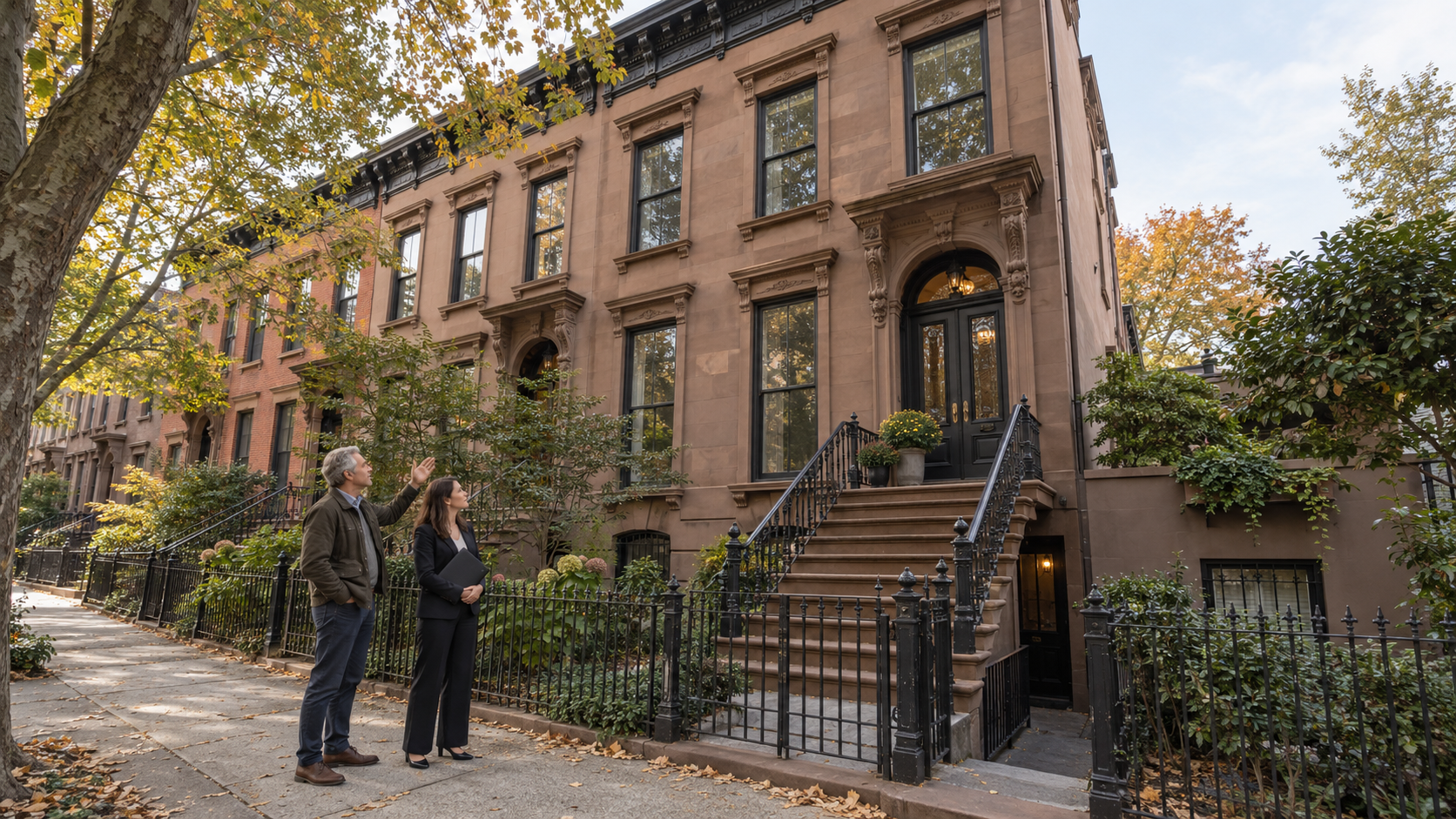
Selling a Brooklyn brownstone involves more than presenting original woodwork and a handsome stoop. Buyers may ask whether the property is an individual landmark or inside a historic district, whether past exterior work received Landmarks Preservation Commission approval, whether the current unit count matches Department of Buildings records, and what the façade, roof, structure and systems may require next. An old house can have no Certificate of Occupancy and still be lawful, while a beautifully renovated layout can raise questions if the records do not support it. Confirm the property’s regulatory identity first, then build the condition and document story around facts rather than assumptions.
The quick answer: verify the house on five tracks
| Track | Seller question | Useful evidence |
|---|---|---|
| Landmark status | Individual landmark, historic district or neither? | LPC map and designation report |
| Legal use | How many dwelling units are approved? | CO, LNO and historical DOB records |
| Work history | Were alterations approved and closed? | LPC permits, DOB filings and sign-offs |
| Condition | What may the exterior, structure and systems need? | Inspections, estimates and repair records |
| Occupancy | Vacant, partly occupied or tenant-occupied? | Leases, rent ledger and deposits |
“Brownstone” is an architectural or marketing description, not proof of landmark status, legal occupancy or construction material throughout the building. Verify each issue separately.
First check whether the property is landmarked
A brownstone may be an individual landmark, within a designated historic district or outside LPC jurisdiction. Do not decide from appearance or an old listing. Search LPC’s Discover NYC Landmarks map, which identifies both designations and provides building-level district information.
Save the designation report and map. The report can identify the building’s style, date, architect or builder, significant features and contribution to the district. Use it to describe the architecture without claiming every visible detail is original.
Designation does not prohibit change; it requires the correct review. Work visible on a nearby house is not proof that the same alteration is permissible here.
Organize LPC approvals and violations
For a designated property, LPC requires approval for exterior restoration, replacement, alteration, reconstruction, demolition or new construction—even when work is not street-visible or needs no DOB permit. Some interior work also requires review when it needs a DOB permit, affects the exterior or involves a designated interior. Check the current LPC permit types before calling work exempt.
The main approvals are a Certificate of No Effect, Permit for Minor Work and Certificate of Appropriateness. LPC staff assigns the proper path after a Portico filing. Most approvals are staff-level; proposals outside LPC rules may require Commission review.
Search the LPC permit database for applications and permits since January 1, 2016; earlier work may require a records request. The Permit Application Finder also shows active and recently rescinded violations.
Match approvals to the completed work and look for a Notice of Compliance or applicable sign-off. Unpermitted work, departures from a permit or disrepair can trigger enforcement. Have an architect, preservation professional and attorney review discrepancies before calling them resolved.
Confirm legal use independently of landmark status
LPC designation does not establish unit count. A one-family house inside a historic district remains one-family unless legal-use records support otherwise.
The DOB Certificate of Occupancy guidance says a CO states legal use and permitted occupancy. Many Brooklyn rowhouses predate that requirement. A pre-1938 building may lawfully lack a CO when later alterations did not change use, egress or occupancy; in an appropriate case, DOB may issue a Letter of No Objection.
Compare records with garden apartments, cellar or basement rooms, extra kitchens, attics, extensions and entrances. Physical features, meters or years of use do not prove a legal dwelling unit. Address mismatches before listing, or disclose and price the uncertainty accurately.
Review both DOB and HPD records
DOB’s building-data page explains that pre-DOB NOW permits and applications remain in BIS while newer filings appear in DOB NOW. Search both systems rather than treating one clean screen as the complete history.
| Record | What buyers may ask | Seller preparation |
|---|---|---|
| Open applications | Was work completed or never signed off? | Confirm closure or withdrawal path |
| DOB/OATH violations | What caused them, and were they corrected? | Preserve notices and dismissal proof |
| LPC approvals | Does completed work match the permit? | Pair drawings with compliance records |
| CO, LNO or history | Does marketed use match the records? | Resolve evidence with professionals |
| HPD history | Are there violations, charges or orders? | Review HPD Online |
Online databases are screening tools. They do not replace a title search, physical inspection or professional interpretation of old plans.
Prepare for brownstone-specific condition questions
Buyers may value historic detail while investigating the cost of an older rowhouse. The seller need not diagnose it; identify known facts and organize credible records.
Review these areas before photography and showings:
- Façade: spalling, cracks, patches, staining and resurfacing history
- Stoop, areaway and railings: movement, drainage and corrosion
- Cornice, parapet and roof: deterioration, leaks, flashing and warranties
- Windows and doors: operation, replacement history and LPC approvals
- Structure: sloping floors, altered joists, removed walls and reports
- Systems: electrical service, plumbing, sewer, boiler, heating and cooling
- Water and environmental history: cellar moisture, mold, asbestos and lead records
LPC’s Rowhouse Manual is a useful maintenance reference for designated rowhouses, but not an inspection or project approval.
Do not announce a repair budget from appearance alone. Patching, resurfacing, structural repair and cosmetic coating are different scopes. Obtain qualified opinions before estimating cost or value effect.
If tenants remain, create a separate occupancy file
An occupied brownstone may appeal to an investor, while a vacant or partly vacant one may attract more owner-occupants. Neither status guarantees a higher price. Legal use, lease terms, actual rent, expenses and the promised condition at closing shape the buyer pool.
Gather leases and riders, payment history, security-deposit records, rent-regulation documents, utility responsibilities and any lawful written vacancy agreement. Do not advertise vacant delivery unless the seller can legally and contractually provide it. The separate guide to selling a house with tenants in NYC covers those procedures.
Choose repairs and marketing claims carefully
Before façade, window, stoop or extension work, confirm required approvals, filing responsibility and completion documents. A rushed repair can create an open filing or mismatch without a dependable return.
Compare three paths: complete justified repairs, correct only safety or marketability obstacles, or sell in documented present condition. Estimate price, work and professional costs, approval time, carrying expense, financing and closing risk. Add transaction expenses from the NYC seller closing-cost guide.
Landmark status creates no fixed premium or discount. Use recent sales with similar location, width, legal unit count, condition, occupancy, outdoor space and designation context.
Build the buyer file before launching the listing
Gather the deed, survey, CO or LNO evidence, DOB and LPC records, approved drawings, compliance notices, violations, invoices, warranties, reports, leases and operating information. Use the NYC seller-document checklist for the broader file.
For a covered one- to four-family sale, address the current Property Condition Disclosure Statement before contract. The property-condition disclosure guide explains timing, exemptions and as-is sales.
The strongest marketing story is supportable: what records establish, which historic features remain, what work was approved, the legal use and available condition information.
Sheldon Myers, Licensed Associate Broker, can help a Brooklyn owner compare brownstone sales, organize the marketing file and position the property while legal, architectural and preservation questions remain with qualified professionals. Request a Brooklyn brownstone consultation.
Serving Brooklyn and Queens property owners since 2004.
This article provides general real-estate information, not legal, architectural, engineering, preservation, tax or appraisal advice. Requirements depend on designation, legal use, work history, condition, occupancy and transaction documents. Consult a New York attorney and qualified professionals about a specific property.