
Buying a Two-Family House in Queens: Legal Use, Rental Income and Due Diligence
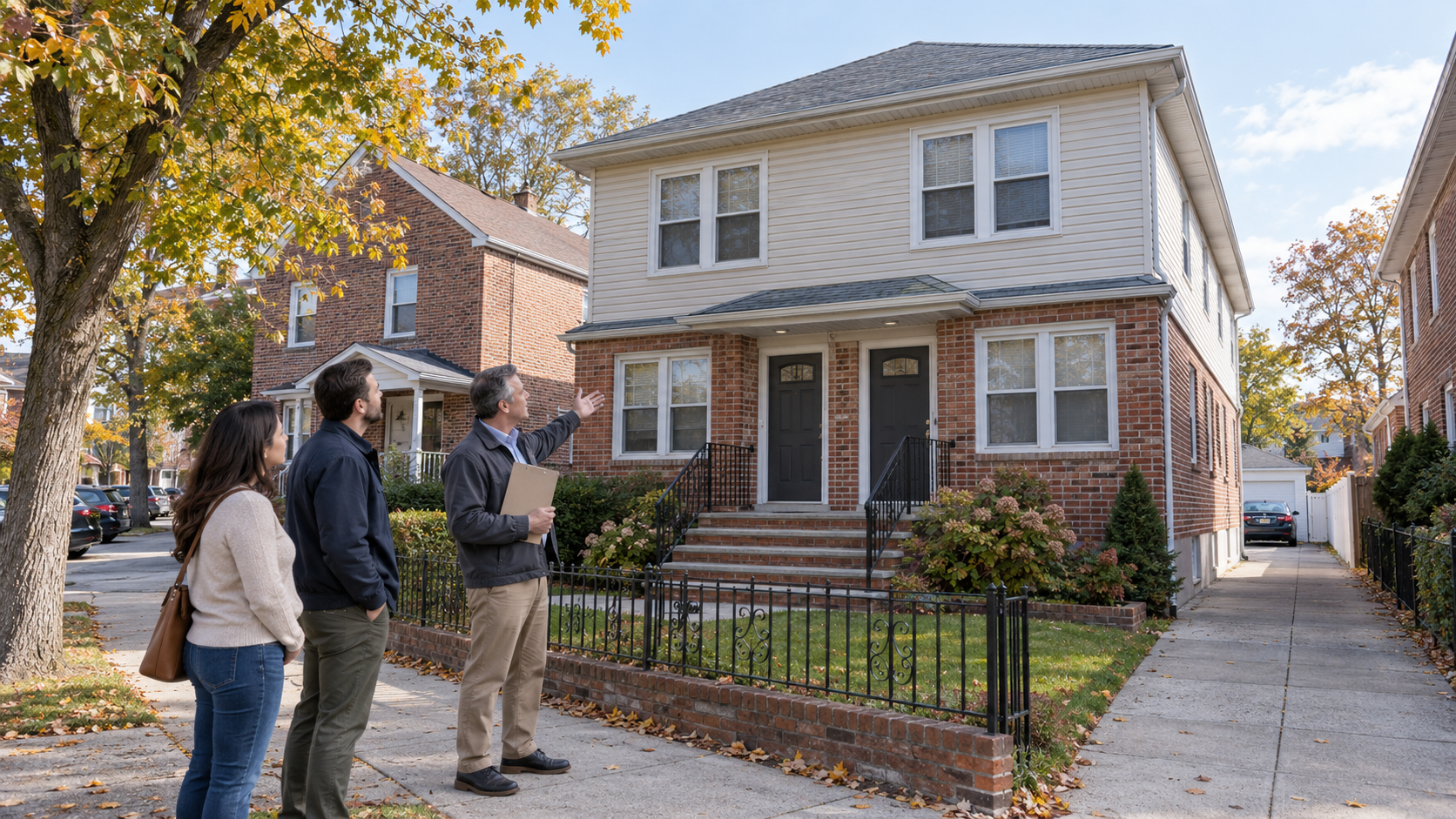
Buying a two-family house in Queens can provide a home, rental income and long-term flexibility—but only if the property works on paper as well as it does during the showing. Before committing, confirm that city records support two-family use, examine the current layout, review any leases and verify how much rent your lender will actually recognize. A finished basement, second kitchen or seller’s projected rent does not answer those questions. The strongest offer starts with coordinated due diligence from the outset by your attorney, lender, inspector and, when records or alterations are unclear, an architect or other qualified building professional.
The quick answer: investigate five separate layers
Do not rely on a single inspection, appraisal or online search to answer every question. Each part of the review has a different purpose.
| Due-diligence layer | What it should establish | Appropriate reviewer |
|---|---|---|
| Legal use | Whether records support the advertised number of dwelling units | Attorney and, when needed, architect |
| Building history | Permits, applications, complaints, violations and unresolved work | Buyer’s team using DOB and HPD records |
| Physical condition | Observable defects, safety issues and likely repairs | Licensed home inspector and specialists |
| Rental position | Leases, actual collections, deposits, expenses and occupancy rights | Attorney, lender and real-estate professional |
| Title and financing | Ownership, liens, survey matters, insurance and lender eligibility | Attorney, title company, insurer and lender |
One favorable result does not replace the others. A clean inspection does not legalize an extra unit, and a Certificate of Occupancy does not guarantee that the roof or boiler is sound.
Confirm that the house is legally two-family
Start with the Certificate of Occupancy when one exists. The NYC Department of Buildings explains that a Certificate of Occupancy states a building’s legal use and permitted occupancy. Compare the permitted unit count and floor uses with what you actually see.
Many Queens homes are older. The absence of a Certificate of Occupancy does not automatically make a pre-1938 building illegal. If later alterations did not change its use, egress or occupancy, historical records and a Letter of No Objection may help establish legal use. This requires property-specific review; “built before 1938” is not a blanket approval for the present layout.
Two kitchens, separate entrances, individual mailboxes or multiple utility meters are clues—not legal proof. Be cautious when a listing describes a cellar, basement, attic or converted garage as a rentable apartment. New York City’s newer ADU rules create pathways for certain approved projects, but they do not automatically legalize every existing conversion. If the layout and records differ, have your attorney and a qualified architect explain the risk, possible correction path and effect on financing before you proceed.
For the owner’s side of these same valuation issues, see how legal use, rents and vacancy affect a Queens two-family sale.
Read the building history—not just the listing description
Use the DOB building-history tools to review BIS and DOB NOW. They can show Certificates of Occupancy, job applications, permits, complaints, inspections and violations. Then check HPD Online for available complaints, violations, charges, litigation, registration information and vacate orders.
Interpret records carefully. A complaint is an allegation, not necessarily a proven defect; a closed violation does not confirm that every alteration is approved; and no online violation does not mean the property has no problem. Look for patterns and mismatches, such as an open alteration application, work without a final sign-off, a complaint about illegal occupancy or a three-unit physical arrangement in a two-family record.
If material work was performed, request permits, approved plans and sign-offs through the attorneys. An architect can compare those records with the present conditions. Price any unresolved item realistically instead of assuming the buyer can legalize it cheaply after closing.
Inspect the building as a small income property
Hire an appropriately licensed home inspector and verify credentials through New York’s Department of State. A two-family inspection should cover the same major systems as any house—structure, roof, drainage, moisture, electrical, plumbing, heating and visible safety concerns—but also examine how two households use the building.
Questions may include:
- Are heat, hot water and utilities shared or separately metered?
- Which equipment serves each unit, and how old is it?
- Are there signs of recurring basement water or sewer backup?
- Do entrances, stairs and visible means of egress match the expected use?
- Are owner and tenant spaces clearly separated and safely accessible?
- What near-term repairs should be included in the buyer’s budget?
An inspector reports observable condition within the inspection’s scope. Specialized concerns may require an electrician, plumber, roofer, engineer, environmental professional or sewer-line inspection. Neither the inspector nor the appraiser replaces the legal-use and title review.
Verify actual rent before relying on projected rent
If a unit is occupied, request the complete lease and riders, rent ledger, payment history, security-deposit record, renewal information and any written side agreements through the proper due-diligence process. Confirm which utilities the landlord pays and whether concessions or arrears affect the headline rent.
Ask counsel to investigate rent regulation or other tenant protections rather than accepting “market-rate” as a listing fact. A new owner generally takes the property subject to existing tenancy rights; the sale itself does not erase a lease. The guide to buying or selling a tenant-occupied NYC house explains the main occupancy distinctions.
Security deposits also need a documented closing transfer. Review the deposit amount, account records and tenant-notice procedure with counsel. The NYC security-deposit guide covers the owner’s continuing duties after acquisition.
For a vacant unit, projected market rent should be supported by genuinely comparable rentals with similar size, condition, location and legal use. Gross rent is not profit. Build a budget for taxes, insurance, water, owner-paid utilities, maintenance, repairs, vacancy, management and capital replacements.
Ask the lender how much rental income it will accept
Speak with a lender about a two-family purchase before using anticipated rent to set your maximum price. Program rules, occupancy, documentation, reserves and the borrower’s property-management history can change the result.
Fannie Mae’s current rental-income guidance for the subject property recognizes eligible two- to four-unit principal residences and one- to four-unit investment properties. For an applicable purchase, it generally calls for an appraisal rent schedule or small-income-property appraisal and transferred leases when relevant. Its current calculation begins with 75% of qualifying monthly gross rent, not 100%, before the required housing-cost treatment. Borrowers with less than 12 months of property-management experience face additional limits on using positive rental income.
Those are Fannie Mae rules, not a promise that every loan will use the same amount. FHA, VA, portfolio and other products may differ. Have the lender underwrite the actual property, rent documentation and your circumstances rather than relying on a web calculator or verbal estimate.
Complete title, contract and insurance review
Your attorney and title company should verify ownership, mortgages, judgments, tax or water issues, easements and other title exceptions. If the search identifies an encumbrance, this explanation of selling a NYC house with a lien provides useful background, but your attorney must determine what the seller must clear for your transaction.
Discuss the contract’s inspection, financing, appraisal, occupancy and closing provisions before signing. Confirm what personal property remains, which unit—if any—will be delivered vacant, and what tenant documents and deposits transfer. Obtain an insurance quote early, especially when the property has an older roof or electrical system, prior claims, vacancy, rental occupancy or flood exposure.
Make the offer fit the verified property
A Queens two-family house can combine housing and income effectively, but the advertised unit count and projected rent are only the beginning. Base the offer on verified legal use, current tenancy, lender-accepted income, physical condition and total operating costs. When a material question remains, define who will investigate it and whether the answer is needed before contract, during due diligence or as a negotiated closing requirement.
Request a Queens two-family buyer consultation to compare neighborhoods, occupancy options and suitable properties with Sheldon Myers, Licensed Associate Broker. Serving Brooklyn and Queens buyers and property owners since 2004.
This article provides general real-estate information, not legal, lending, architectural, engineering, inspection, insurance or tax advice. Property records, loan programs, tenancy rights and individual buildings vary. Retain the appropriate qualified professionals for a specific purchase.